
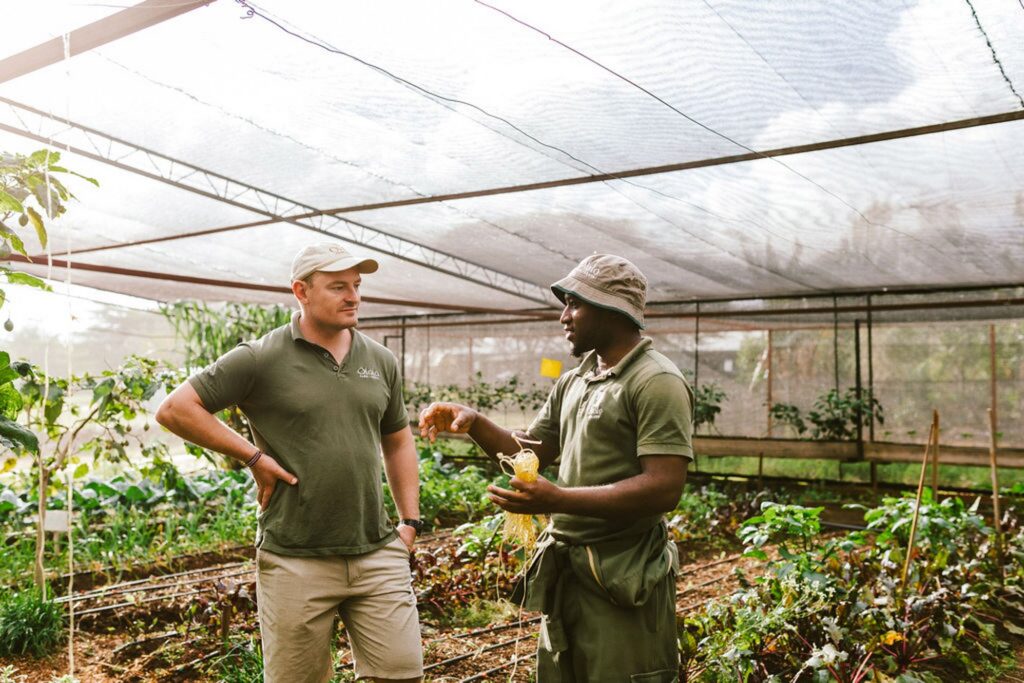
 George Chapman at Ololo Farm – where regenerative farming, food and wildlife meet
What does farming look like in a country where cattle graze alongside wildlife, flower farms supply markets around the world, and lions can still be a very real threat to livestock?
Kenya is best known for its wildlife and safaris. But beyond the national parks is an agricultural industry that I think is every bit as interesting.
Sitting across the equator, Kenya has an extraordinary range of farming environments – from the fertile highlands around Mount Kenya to the dryer rangelands of Laikipia and the highly productive horticultural region around Lake Naivasha.
Kenya is internationally known for tea, coffee, cut flowers and horticulture, alongside significant livestock, dairy and poultry industries. But for me, one of the most fascinating parts of farming here is the relationship between agriculture, people and wildlife.
Farming Next Door to Nairobi National Park
We’ve been farming at Ololo Farm since 2019, initially with poultry and, increasingly, with our free-range pigs.
Our farm borders Nairobi National Park, so wildlife isn’t something that exists somewhere in the distance. It’s part of farming here.
We’ve had our share of challenges with baboons, mongooses, hyenas and other wildlife – and yes, there are lions on the other side of the fence.
Baboons have probably caused us the most frustration, particularly during drought when food becomes scarce. Chickens, eggs, and anything grown suddenly become very attractive.
It’s frustrating as a farmer, but it’s also a reminder that wildlife is responding to many of the same pressures – drought, food availability and competition for resources.
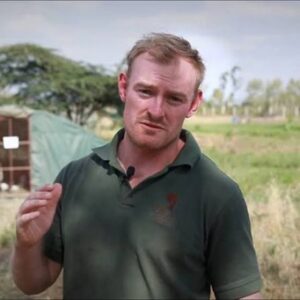
George Chapman at Ololo Farm on the edge of Nairobi National Park.
Where Cattle and Wildlife Share the Same Landscape
Travel north into Laikipia and this relationship becomes even more interesting.
Here, pastoral communities, commercial cattle ranches, wildlife and conservancies can share the same landscapes. Cattle may graze alongside zebra, giraffe, elephant and antelope, while lions and hyenas add another dimension to livestock management.
For an Australian farmer, there are some interesting parallels. Parts of Laikipia are dry, extensive grazing environments where rainfall and pasture availability determine how livestock are managed.
But add elephants, lions, pastoral communities and conservation to the equation and you’re looking at grazing management in a completely different context.
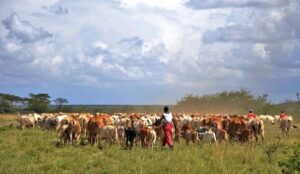
Pastoral livestock systems remain an important part of Kenya’s rangelands.
Farming Through Drought
Drought makes this relationship even more complicated.
Pastoral communities have traditionally moved livestock in search of grass and water. During severe drought, increasing pressure on grazing can contribute to tensions between communities, ranches and conservancies.
Climate is only part of a much more complicated story involving land, politics and access to resources, but drought can amplify those pressures.
It makes good rangeland management and drought resilience critical.
Planned grazing, protecting dry-season grazing reserves, strategic destocking and allowing pasture sufficient recovery can all help.
Some Kenyan graziers and conservancies have also introduced principles associated with Allan Savory’s Holistic Management framework (see his Ted Talk), using planned livestock movements and recovery periods to manage rangelands.
How do you build a productive, drought-resilient livestock system while sharing the landscape with pastoral communities and wildlife?
From Naivasha’s Flower Farms to the Highlands
Around Lake Naivasha, sophisticated horticultural and flower farms produce for international export markets. Head into the higher rainfall areas and you’ll find tea, coffee, dairy and other commercial farming enterprises.
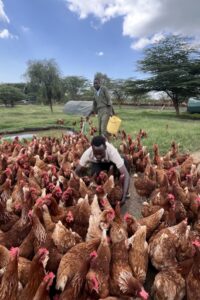
Free-range poultry at Ololo Farm.
What interests me isn’t simply seeing these farms. It’s understanding how the businesses actually work.
Where do they sell? How do they manage water? What are their biggest costs? How do they manage labour and climate variability? And what can farmers from different countries learn from one another?
Those are the conversations that make visiting farms worthwhile.
Agriculture and Conservation
The relationship between farming and conservation isn’t always easy either.
For a pastoralist, losing cattle to a lion can mean losing an important part of their livelihood. At the same time, retaliatory killing of predators threatens the wildlife on which much of Kenya’s tourism economy depends.
Finding ways for communities to benefit from conservation while maintaining productive livestock systems is one of Kenya’s great challenges.
It’s also what makes an agricultural safari here so interesting.
You’re not simply looking at farms. You’re seeing agriculture, livelihoods, climate, wildlife and conservation interacting within the same landscape.
Come and See Kenyan Agriculture for Yourself
After farming here for the past several years, I’ve become increasingly interested in sharing this side of Kenya with farmers and agricultural professionals from overseas.
Through Ololo Safaris and Ololo Safari Lodge & Farm, we’re developing agricultural safaris through Kenya, which I’ll personally host.
George has a background in agribusiness, regenerative agriculture and sustainable food systems. He established Ololo Farming Company and has helped develop it into a leading Kenyan food brand, giving him hands-on experience in regenerative farming as well as the commercial realities of building an agricultural business. He holds a Bachelor of Agribusiness from the University of Queensland and a Master’s in Sustainable Agriculture and Food Security from the Royal Agricultural University in the UK.
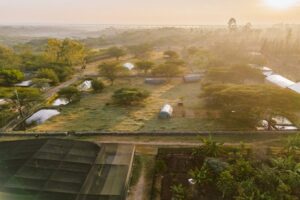
Ololo Farm on the edge of Nairobi National Park – the starting point for our agricultural safaris.
Depending on your interests, a journey might take you from Ololo Farm and Nairobi National Park to commercial farms in the Kenyan highlands, horticulture around Lake Naivasha, and livestock enterprises and conservancies in Laikipia.
And we’ll still go on safari.
Agriculture and wildlife aren’t separate stories in Kenya. In many places, they’re happening on the same landscape.
Our agricultural safaris can be tailored around your interests – whether that’s livestock and grazing, horticulture, dairy, regenerative agriculture, agribusiness, conservation or a mixture of everything.
Come to Kenya for the wildlife, but leave understanding a little more about the farmers, communities and food systems that exist alongside it.
Interested in an Agricultural Safari in Kenya?
If you’re a farmer, agricultural organisation, agribusiness or group interested in experiencing Kenyan agriculture firsthand, get in touch.
George Chapman
Ololo Farming Company | Ololo Safaris
george@ololofarm.com
https://ololosafaris.com/sample-itineraries/agricultural-safaris-in-kenya/